


Choosing Your Nursery Bedding
Preparing a nursery is an exciting part of welcoming a new baby. Once you have chosen a cot or Moses basket, one of the next priorities is selecting practical, comfortable and easy-to-care-for baby bedding.
Newborns spend a great deal of time sleeping, feeding and resting, so it is important to create a simple sleep space that is easy to keep clean. You do not need to fill the cot with decorative accessories. A suitable mattress, several well-fitting sheets and an appropriate sleeping bag or lightweight blanket are the main essentials.
This guide explains what newborn bedding you need, how many sheets to buy, which materials to consider and how to follow current safer-sleep recommendations.
What bedding does a newborn baby need?
A newborn does not need an elaborate bedding set. In fact, a simple cot or Moses basket is generally easier to keep clean, organised and suitable for safer sleep.
The main newborn bedding essentials are:
- A firm, flat and waterproof mattress that fits the cot or Moses basket correctly
- A waterproof mattress protector or cover
- Three or four well-fitting fitted sheets
- A correctly sized baby sleeping bag or lightweight blanket
- Spare bedding for night-time changes and laundry days
Always measure the mattress before ordering sheets. Cot, cot-bed, crib and Moses basket mattresses are available in different dimensions, and a sheet should fit smoothly without loose or excess fabric.
You can explore our wider children’s and nursery collection for bedding, blankets, bath linens and accessories designed for younger members of the family.
Choose a suitable mattress and protector
The mattress is the foundation of the sleep space. It should be firm, flat, waterproof and fit the cot or Moses basket without gaps around the edges.
A waterproof protector can make everyday care easier by protecting the mattress from leaks and spills. Choose one that fits securely and does not create folds, padding or uneven areas beneath the fitted sheet.
Browse our children’s and nursery mattress protection collection for suitable protection options. Please note that the same collection also contains duvets and pillows intended for older children, which should not be used for babies under 12 months.
How many cot or Moses basket sheets do you need?
Three or four fitted sheets is a practical starting point for most new parents. Babies may need frequent bedding changes because of leaks, dribbles or sickness, so having clean replacements nearby can make night-time changes easier.
A useful rotation is:
- One fitted sheet in use
- One clean fitted sheet ready for the next change
- One or two fitted sheets in the laundry or cupboard
You may need more sheets if you do not wash clothes and bedding every day, or if your baby regularly sleeps in more than one location, such as a bedside cot and a Moses basket downstairs.
Store a spare fitted sheet and sleepwear close to the cot, but outside the baby’s sleep space, so they are easy to reach during the night.
How to choose baby and nursery sheets
The most important consideration is fit. A fitted sheet should sit securely around the mattress and remain smooth when your baby moves.
When comparing baby sheets, look for:
- The exact mattress dimensions
- A secure elasticated edge
- A smooth, breathable fabric
- Machine-washable care instructions
- A finish that remains comfortable after regular washing
Natural cotton is a popular option because it feels soft, is breathable and can usually be washed regularly. Avoid buying solely on thread count. For nursery bedding, fit, fabric quality, construction and easy care are more important than an unusually high thread-count number.
Neutral white and soft colours are practical choices because they can be coordinated with different nursery styles and passed on to younger siblings. Colour and personality can be introduced through wall art, storage, bath towels and accessories outside the cot.
Should you choose organic cotton baby bedding?
Organic cotton bedding can be a good choice for parents who prefer natural fibres and want to consider how the cotton has been grown and processed.
Rather than relying only on the word “organic”, read the full product description and look for clear information about:
- The fabric composition
- Where the product was made
- Any recognised textile certification
- The washing and care instructions
- Whether the product is suitable for the intended age
Softness and breathability can contribute to comfort, but organic cotton should not be treated as a replacement for safer-sleep practices. A well-fitting sheet, an appropriate mattress and a clear sleep space remain the priorities.
Should a newborn use a blanket or sleeping bag?
A correctly fitting baby sleeping bag can be a convenient alternative to blankets. Select the appropriate size and tog rating for the room temperature, and make sure it fits securely around the shoulders so the baby cannot slip down inside it.
When a blanket is used, NHS guidance recommends a lightweight cellular cotton blanket. The baby should be placed with their feet near the foot of the cot, with the blanket tucked in firmly and no higher than their shoulders. The blanket should not be doubled over, as this creates additional layers of warmth.
Decorative blankets, wool throws and baby shawls can still be useful for supervised cuddles, travelling, a pram or as a keepsake. They should not be left loose inside a sleeping baby’s cot.
Explore our children’s blankets, throws and baby shawls for supervised daytime use, gifting and nursery styling.
A baby shawl for special occasions
A soft baby shawl can be a thoughtful item for the journey home from hospital, a naming ceremony, christening or family occasion. It can also make a keepsake gift that can be personalised and stored after your baby has outgrown it.
Browse our gifts for children and babies, including baby shawls, organic cotton towels and personalised nursery gifts.
Important safer-sleep advice for babies
Safer-sleep reminder
The NHS advises that the safest place for a baby to sleep during the first six months is in a cot or Moses basket, on their back, in the same room as their parent or carer.
The mattress should be firm, flat and waterproof. Keep pillows, duvets, cot bumpers, toys, pods, nests and loose bedding out of the cot.
For the latest recommendations on sleep position, mattresses, blankets and what should be kept out of a baby’s cot, read the official NHS safer sleep advice for babies.
Always follow the manufacturer’s instructions for mattresses, sleeping bags and other nursery products. Speak to your midwife or health visitor when you need advice specific to your baby.
Are pillows and duvets safe for newborns?
No. Pillows and duvets should not be used for babies under 12 months because of the risk of suffocation and overheating.
Cot bumpers and padded sleep accessories should also be avoided. Even when they are sold as part of a matching nursery collection, decorative items should not be placed inside a newborn’s sleep space.
Save decorative cushions, quilts and duvet sets for when your child is old enough to use them safely.
How to wash and care for baby bedding
Baby bedding needs to withstand regular washing, so care requirements should be considered before purchasing.
Check each product’s care label and follow the recommended washing temperature. Before putting a fitted sheet back on the mattress, make sure it is completely dry and check that the elastic and seams remain secure.
These simple habits can help keep nursery bedding fresh:
- Wash new sheets before their first use
- Change sheets promptly after leaks or spills
- Keep clean and used bedding separate
- Dry bedding thoroughly before storing it
- Check regularly for worn elastic, loose threads or damage
- Store spare bedding in a clean, dry cupboard or cotton laundry bag
Strongly fragranced products are not essential. Choose a laundry routine that is appropriate for your household and follow any medical advice given for allergies, eczema or sensitive skin.
Useful nursery accessories
Once the essential sleep items are ready, a few practical accessories can make the nursery easier to use.
Blackout blinds
A blackout blind can help reduce daylight during naps and early summer mornings. Make sure blind cords are secured safely and kept well away from the cot.
Baby monitor
A monitor can help you hear or see your baby when you are in another room. It does not replace regular checks or safer-sleep practices, but many parents find it reassuring.
Low-level lighting
A soft night light can be helpful during feeds and changes. Position lighting and cables away from the cot and keep the room calm rather than brightly lit at night.
Nursery storage
Keep nappies, sleepwear, muslins and clean sheets organised close to the changing area. Do not hang storage bags, cords or other accessories from the cot.
Hooded baby towels
A large hooded towel can help keep your baby warm after a bath. Cotton velour and towelling are soft, absorbent options that can also make a practical new-baby gift.
Browse our collection of children’s and baby towels and bath robes, or choose an embroidered and personalised baby towel for a gift or keepsake.

Choosing bedding as your baby grows
Your child’s bedding needs will change as they grow. Continue to follow safer-sleep guidance throughout the first year and only introduce pillows and duvets when they are age-appropriate.
Once your child is old enough for a duvet, you can begin looking at cot-bed duvet covers and coordinated pillowcases. Measure the duvet and mattress carefully because cot-bed dimensions can vary.
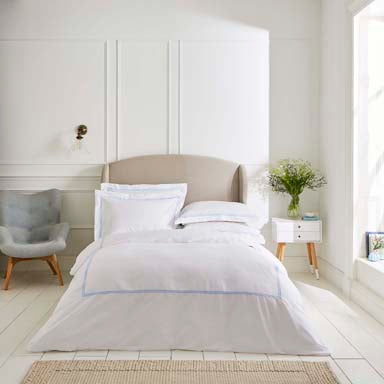
Our children’s cotton bed linen collection includes timeless white bedding, organic cotton designs and embroidered colour options for cot beds and larger children’s beds.
Newborn nursery bedding checklist
Before your baby arrives, check that you have:
- A firm, flat and waterproof mattress in the correct size
- A secure waterproof mattress protector
- Three or four fitted sheets
- A suitable baby sleeping bag or lightweight cellular blanket
- Spare sleepwear and bedding for night-time changes
- A clean, dry place to store spare sheets
- A soft hooded towel for bath time
- Up-to-date safer-sleep information
The best nursery bedding is not necessarily the most elaborate. Focus on a secure fit, washable fabrics, practical spare sheets and a clear cot that follows current safer-sleep guidance.
By beginning with the essentials and adding decorative pieces outside the sleep space, you can create a nursery that feels calm, comfortable and easy to care for.


