


Best Bedding for Hot Sleepers: Cool Sheets and Summer Duvets
Feeling too hot and uncomfortable in bed can make it difficult to settle down and enjoy a restful night’s sleep. Heavy duvets, dense synthetic fabrics and an overly warm bedroom can all contribute to a hot and stuffy sleeping environment.
Changing your bedding is a simple way to make your bed feel fresher during warmer weather. Lightweight cotton sheets, a lower-tog duvet and fewer bedding layers can help create a cooler and more comfortable place to sleep.
This guide explains how to choose the best bedding for hot sleepers, including cotton percale sheets, summer duvets, silk-mix pillows and lightweight blankets.

1. Start with a cooler bedroom
Your bedding is only one part of your sleeping environment. Before changing your sheets or duvet, look at how much heat is building up in the bedroom during the day.
Close curtains or blinds when direct sunlight is entering the room. Once the outdoor temperature has fallen, opening a window can help improve ventilation when it is safe to do so.
Turn off unnecessary lights and electrical equipment, which can add heat to the room. You may also prefer to use a fan when appropriate, although it is important to follow current hot-weather health guidance during periods of extreme heat.
The NHS advises that a cool, dark and well-ventilated bedroom is generally more comfortable for sleep. For wider advice about keeping your home cool, hydration and recognising heat-related illness, read the official NHS guidance on coping in hot weather.
2. Choose breathable cotton bed linen
Cotton is a popular choice for summer bedding because it is a natural, breathable and absorbent fibre. It allows air to move through the fabric and can help manage the moisture produced naturally while you sleep.
By comparison, some dense synthetic fabrics can feel less breathable and may hold warmth close to the body. This does not mean that every synthetic product will feel hot, as construction, filling and fabric weight also influence comfort.
Look for bed linen that feels light, smooth and comfortable against the skin. A heavier fabric may still feel warm even when it is made from cotton.
Browse our cotton duvet covers, which include crisp percale, smooth sateen and embroidered designs in sizes ranging from single to emperor.
Is organic cotton cooler than ordinary cotton?
Organic cotton describes how the cotton has been grown and processed. It does not automatically mean that every organic cotton sheet will feel cooler than every conventionally grown cotton sheet.
For sleeping comfort, consider the weave, fabric weight and finish as well as the cotton’s sourcing. A lightweight organic cotton percale sheet may feel particularly fresh during warmer weather because of its crisp construction.
Our guide to choosing bed linen explains fabric, weave, thread count, seasonality and care in more detail.
3. Cotton percale or sateen: which is cooler?
Percale and sateen are both cotton fabrics, but the different weaving methods give them noticeably different textures.
Cotton percale
Percale has a crisp, matt finish and feels cool when you first get into bed. Its simple one-thread-over, one-thread-under construction creates a fresh and lightweight feel that many hot sleepers prefer.
Percale can therefore be a good choice for:
- Warm summer bedrooms
- People who prefer crisp sheets
- Hot sleepers
- Guest bedrooms used during summer
- Layering beneath a lightweight duvet or blanket
The Vermont organic cotton percale flat sheet is a lightweight option that can be used as a top sheet during warmer weather.
Cotton sateen
Sateen has a smoother surface, subtle sheen and softer drape. It generally feels slightly warmer than percale, although a good-quality cotton sateen can still be comfortable throughout the year.
Sateen may suit people who prefer soft, silky-feeling bed linen rather than the crisp handle of percale.
There is no single correct fabric for every hot sleeper. Personal preference, room temperature, nightwear and the number of bedding layers all affect how warm you feel.
4. Try a flat sheet instead of a duvet
During particularly warm nights, a duvet may feel unnecessary. Sleeping beneath a cotton flat sheet can provide a light covering without the insulation of a filled duvet.
Place the flat sheet over your fitted sheet and leave it untucked at the sides if you prefer greater airflow. You can fold the top edge back neatly to create a fresh hotel-style finish.
Keep a lightweight blanket folded at the foot of the bed so that you can add another layer if the temperature falls during the night.
Our luxury cotton flat sheets are available in organic cotton percale and smooth cotton sateen. They can be used as top sheets in summer or as an additional bedding layer during cooler months.
Should you use a fitted sheet as well?
Yes. A fitted sheet protects the sleeping surface and creates a smooth layer over the mattress and mattress protector.
Make sure the fitted sheet is deep enough to accommodate the mattress and any topper. A sheet that is too shallow may loosen, wrinkle or bunch during the night.
Explore our extra-deep cotton fitted sheets for mattresses that require a deeper box depth.
5. Choose a lightweight summer duvet
If you prefer to sleep beneath a duvet throughout the year, choose a lower tog rating during warmer months.
A duvet’s tog rating measures its ability to retain warmth. A higher tog is warmer, while a lower tog offers less insulation. Summer duvets are commonly available at approximately 3 to 4.5 tog.
The right choice will depend on:
- Your normal sleeping temperature
- The temperature of your bedroom
- Your nightwear
- Whether you share the bed
- The duvet filling and construction
Browse our luxury duvet collection to compare silk-mix, goose down, wool, feather and down, and vegan-down options.
You can also read our guide to choosing duvets and pillows for more information about tog ratings, fillings and seasonal weights.
Consider a silk-mix summer duvet
Silk is valued for its lightness and breathability. A silk or silk-mix duvet may appeal to people who want a softer and less bulky covering during warmer weather.
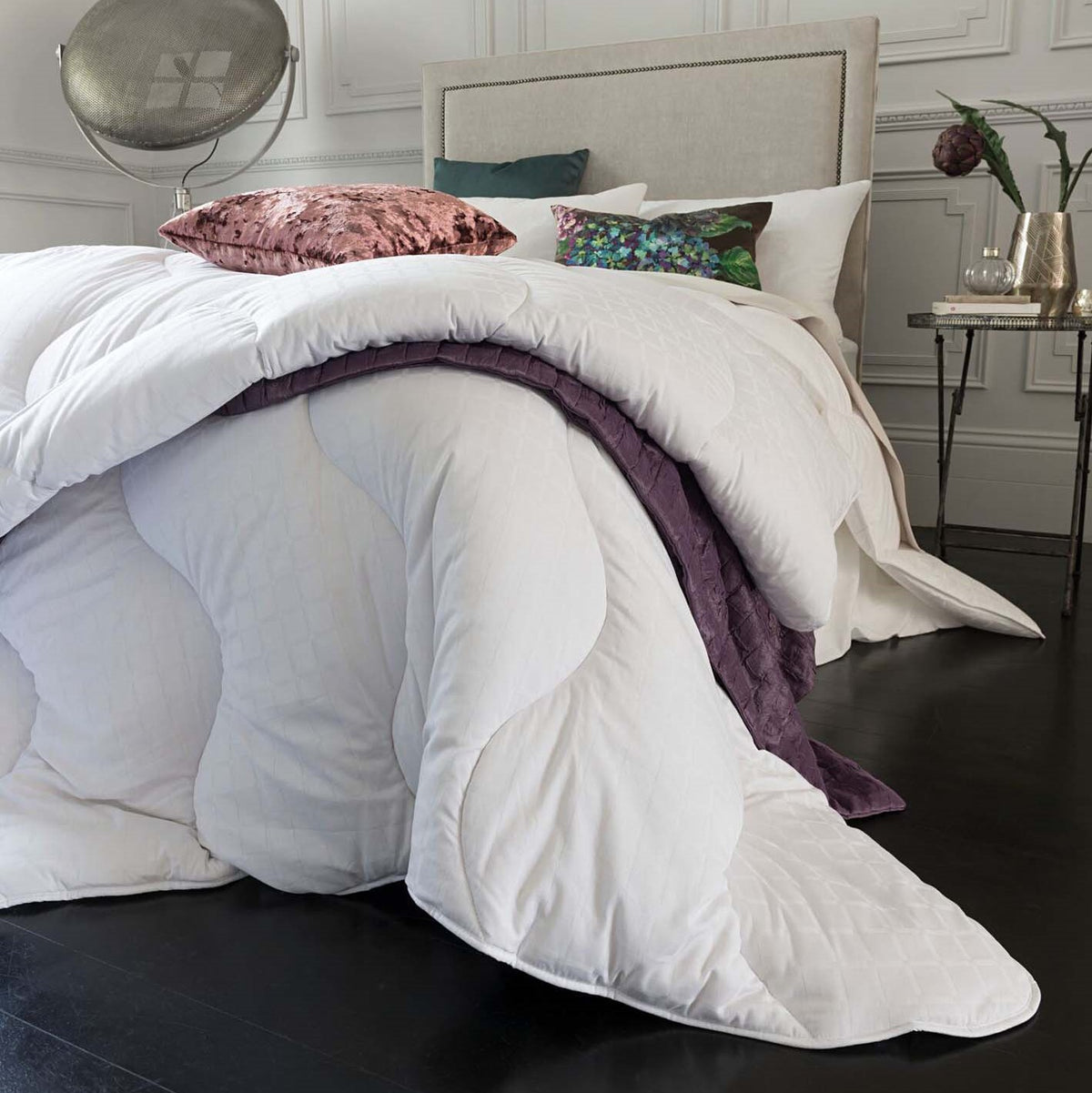
The Richmond Boutique Silk Duvet combines advanced microfibre with 10% pure silk and is available in a lighter 4.5 tog option as well as a warmer 10.5 tog version.
Always check the full filling composition rather than relying only on a product name. A silk-mix duvet and a duvet filled entirely with silk will have different materials, care requirements and price points.
6. Review your pillows and mattress layers
The duvet and sheets may receive most of the attention, but your pillow, mattress protector and topper can also influence how warm the bed feels.
Choose a breathable pillow
A pillow with a breathable cover and an appropriate filling can help prevent excessive warmth around the head and neck.
The Richmond Boutique Silk Pillow contains advanced fibre clusters blended with 10% silk and is encased in a cotton-blend cover. You can also compare goose down, wool, microfibre and vegan-down options in our luxury pillow collection.
Comfort and support should remain the priorities. Choose the pillow height and firmness that suit your normal sleeping position rather than selecting a pillow based on filling alone.
Check your mattress protector and topper
Very thick or dense mattress layers can add insulation beneath your body. If the bed feels noticeably warmer after adding a topper or protector, review its fabric, filling and construction.
A cotton-covered protector may feel more breathable than a dense or heavily padded alternative. However, waterproof protection can still be valuable, so select a product that balances protection with your preferred sleeping temperature.
Browse our mattress protectors, pillow protectors and toppers to compare the available materials and depths.
7. Keep a lightweight blanket nearby
Summer temperatures can fall considerably overnight. A lightweight cotton blanket gives you the flexibility to add warmth without returning to a heavier duvet.
Fold the blanket across the foot of the bed so it is easy to pull up when needed. A washable cotton design is particularly practical for summer because it can also be used on a sofa, outdoors or while travelling.
Our cotton blankets and throws include waffle, herringbone and quilted designs in a range of colours and sizes.

8. Wash and care for summer bed linen
Freshly washed bedding can make the bed feel more comfortable, particularly during warm weather when sheets may absorb more moisture.
Always follow the care label supplied with the product. Different fabrics, decorative finishes and fillings may require different wash temperatures and drying methods.
General cotton bed-linen care tips include:
- Wash bed linen separately from heavily soiled laundry
- Avoid overloading the washing machine
- Remove sheets promptly when the wash cycle finishes
- Line dry when possible or tumble dry at a low temperature
- Avoid over-drying, which can damage cotton fibres
- Make sure bedding is completely dry before storing it
- Rotate several sets to reduce wear on one set
Do not assume that hotter washing is always better. Follow the individual product label and use the temperature required for that particular item.
Read our complete bed-linen care guide for further washing, drying and storage advice.
9. Simple ways to make hot nights more comfortable
Once you have adjusted your bedding, a few additional changes can make the bedroom feel more comfortable.
- Close curtains or blinds during the hottest part of the day
- Open windows later when it is cooler outside and safe to do so
- Use light, loose-fitting nightwear
- Have a cool shower before going to bed
- Keep drinking water nearby
- Avoid placing unnecessary electrical equipment close to the bed
- Use fewer bedding layers
- Move to a cooler room temporarily during extreme heat if practical
For more general ideas, read our guide to keeping cool at night with cotton bedding.
A note about persistent night sweats
It is normal to sweat when your bedroom or bedding is making you too warm. However, regularly waking with soaking wet nightwear or bedding when the room is cool can have other causes.
Read the NHS information about night sweats and speak to your GP when symptoms regularly wake you, concern you or occur alongside other symptoms.
Frequently asked questions about bedding for hot sleepers
What is the best bedding material for hot sleepers?
Many hot sleepers prefer lightweight cotton because it is breathable, absorbent and widely available in different weaves. Cotton percale is particularly popular because of its crisp and cool-to-the-touch finish.
Is percale cooler than sateen?
Percale generally feels crisper and cooler, while sateen feels smoother, silkier and slightly warmer. Individual preference still matters, and some people are comfortable sleeping in lightweight cotton sateen throughout the year.
What tog duvet is best for summer?
A summer duvet is commonly around 3 to 4.5 tog. The correct tog depends on your room, body temperature, nightwear and personal preferences.
Can I sleep with a flat sheet instead of a duvet?
Yes. A cotton flat sheet can provide a light covering during warm nights. Keep a lightweight blanket at the foot of the bed in case the temperature falls overnight.
Are silk duvets suitable for hot sleepers?
Silk and silk-mix duvets are often chosen for their lightness and breathability. Check the tog rating and complete filling composition, as not every product described as silk bedding is filled entirely with pure silk.
Does organic cotton automatically feel cooler?
Not necessarily. Organic refers primarily to how the cotton is produced. The weave, fabric weight, finish and number of bedding layers have a greater influence on how the finished sheet feels in bed.
Creating a cooler and more comfortable summer bed
The best bedding for hot sleepers is usually simple, lightweight and easy to adjust. Begin with breathable cotton sheets, reduce the number of layers and choose a duvet with a suitable summer tog.
Cool cotton percale, a flat top sheet, a lightweight duvet and a cotton blanket at the foot of the bed give you the flexibility to respond when the temperature changes overnight.
Most importantly, choose bedding that feels comfortable to you. Fabric, filling, room temperature and personal preference all work together to determine whether your bed feels cool and inviting.


